

Lentivirus Transduction Protocol
Lentivirus Transduction Protocol
A scientific guide to lentiviral gene delivery, stable cell line generation, polybrene, transduction efficiency, and analytical validation.
01 / Scientific Foundations
A lentivirus transduction protocol is a research framework for transferring genetic material into target cells using engineered lentiviral vectors. It combines vector biology, target-cell compatibility, gene-delivery assessment, and appropriate experimental validation.
Lentiviral vectors are important tools in molecular biology because many systems can transfer genetic information into dividing and nondividing cells. Integrating lentiviral vectors may support persistent transgene expression, making them useful for stable cell line research, reporter studies, gene-function investigations, and functional genomics.
However, no single procedure is appropriate for every cell type or lentiviral vector. Experimental outcomes depend on vector architecture, cellular characteristics, biological context, and the analytical methods used to evaluate gene delivery.
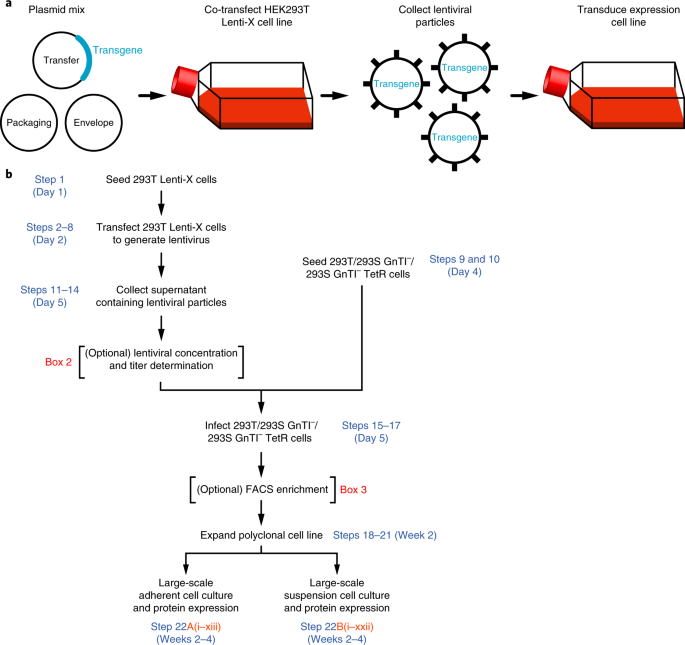
Lentiviral transduction is the process of delivering vector genetic material into target cells. Lentivirus production refers to the separate upstream process of generating vector particles. Successful transduction, genomic integration, and stable gene expression represent distinct experimental outcomes.
How Does Lentiviral Transduction Work?
Lentiviral vectors are derived from lentivirus-based gene delivery systems. Research vectors typically separate the genetic information being transferred from functions required for producing vector particles.
Following interaction with a susceptible target cell, the vector-associated genetic material can enter the cell. In integrating systems, reverse transcription and subsequent integration can establish vector-derived DNA within the host genome.
Integration may support persistent expression, but expression level and stability are influenced by factors such as vector design, cellular regulation, integration context, and the characteristics of the resulting cell population.
Cellular Recognition
Vector-envelope characteristics influence interactions between vector particles and susceptible target cells.
Genetic Delivery
Vector-associated genetic information enters the target-cell environment.
Vector Fate
Vector design determines whether delivered sequences may integrate or persist through other molecular states.
Biological Expression
Appropriate molecular and functional measurements establish whether the intended outcome occurred.

03 / Research Workflow
Lentivirus Transduction Protocol: Key Research Stages
A scientifically sound lentivirus transduction workflow requires clearly defined experimental objectives and validated research procedures. The following framework summarizes the major conceptual stages without prescribing a universal laboratory procedure.
Research Objective
Define whether the study aims to investigate gene expression, reporter activity, gene regulation, or stable cell models.
Vector Characterization
Review vector architecture, integration properties, regulatory elements, and relevant safety characteristics.
Cell Model Assessment
Evaluate the biological characteristics, susceptibility, viability, and relevance of the target-cell system.
Gene Delivery Evaluation
Distinguish evidence of vector delivery from evidence of transcription, protein production, and genomic persistence.
Cell Population Assessment
Consider cellular heterogeneity, population selection effects, and possible changes in cell phenotype.
Analytical Validation
Assess relevant molecular, protein, functional, and long-term outcomes using appropriate controls.
Polybrene in Lentivirus Transduction
One frequently searched topic is the polybrene lentivirus transduction protocol. Polybrene, also known as hexadimethrine bromide, is a polycationic compound investigated in viral-vector gene delivery.
Its biological relevance relates in part to electrostatic interactions between vector particles and cell surfaces. These interactions may influence how particles associate with susceptible cells.
Nevertheless, polybrene is not universally appropriate. Cell-specific sensitivity, toxicity, and changes in cellular phenotype must be considered when interpreting results involving this compound.
Polybrene Versus Retronectin
Retronectin is a recombinant fibronectin-derived material used in certain cell and gene delivery research systems. Its surface-associated properties differ from the polycationic effects associated with polybrene.
| Property | Polybrene | Retronectin |
|---|---|---|
| Material | Polycationic compound | Fibronectin-derived recombinant material |
| Principal concept | Electrostatic interactions | Surface-associated cell/vector interactions |
| Research context | Selected viral-vector delivery models | Selected cell-associated gene delivery models |
| Considerations | Cell-specific sensitivity and viability | Cell adhesion and model-dependent compatibility |

Factors Influencing Lentiviral Transduction Outcomes
Target Cell Characteristics
Cell identity, differentiation state, cellular physiology, and the presence of relevant entry mechanisms can influence gene delivery and transgene expression.
Multiplicity of Infection (MOI)
Multiplicity of infection describes the average relationship between infectious units and target cells in a defined experimental context.
MOI is a population-level concept. It should not be interpreted as evidence that every cell receives an identical number of vector-derived sequences.
Vector Architecture
Vector regulatory elements, envelope properties, integration competence, and transgene features may influence cellular delivery and subsequent expression.
Cellular Viability
Changes in cell health can affect how experimental outcomes are measured and interpreted. An increase in reporter signal does not necessarily indicate improved overall biological performance.
Scientific interpretation
Transduction efficiency, transgene expression, vector-copy measurements, and cellular viability describe different biological properties. Each should be interpreted according to its own measurement method and limitations.
06 / Stable Cell Line Generation
Creating Stable Cell Lines with Lentiviral Vectors
Stable cell line generation is an important application of integrating lentiviral gene delivery. Stable research models can be used to investigate gene expression, protein localization, reporter activity, signaling pathways, and molecular mechanisms.
A stable cell model is not defined solely by an initially positive reporter signal. Scientific evidence should support the persistence of the intended genetic or functional characteristic over a relevant observation period.
Stable Versus Transient Expression
| Feature | Transient Expression | Stable Expression |
|---|---|---|
| Persistence | Typically limited | May persist through cell divisions |
| Genomic integration | Not necessarily required | Frequently associated with integrating systems |
| Research use | Short-term expression studies | Longer-term cellular models |
| Validation | Expression endpoint | Persistence, molecular identity and function |
Why Is Stable Cell Line Validation Important?
Cell populations may contain different integration profiles, gene-expression levels, or functional phenotypes. Long-term biological conclusions therefore require appropriate molecular and functional verification.
Stable gene delivery, stable transgene expression, and a functionally validated stable cell line are related but distinct concepts.
Lentiviral Transduction Compared with Other Gene Delivery Methods
| Method | Scientific Characteristics | Research Considerations |
|---|---|---|
| Lentiviral transduction | Engineered viral-vector gene delivery | Integration status, vector biology, biosafety |
| Chemical transfection | Chemical-mediated nucleic-acid introduction | Cell compatibility and expression persistence |
| Electroporation | Physical nucleic-acid delivery | Cellular tolerance and delivery outcomes |
| AAV-mediated delivery | Viral-vector gene delivery | Payload constraints and different vector biology |
Method selection depends on the scientific objective, target-cell system, desired genetic outcome, and laboratory risk assessment.
Quality Control and Analytical Validation
Quality control is essential for interpreting lentiviral gene delivery experiments. Successful delivery should not be assumed to demonstrate successful expression or a particular biological function.
| Assessment | Scientific Purpose |
|---|---|
| Nucleic-acid analysis | Investigate vector-derived genetic sequences |
| Reporter analysis | Assess measurable reporter expression |
| Protein detection | Evaluate the intended protein product |
| Genomic analysis | Examine evidence relevant to integration |
| Functional assays | Assess the intended cellular phenotype |
| Longitudinal evaluation | Investigate stability over time |
Scientific reporting should describe the evidence supporting each conclusion, distinguish measured outcomes from assumptions, and acknowledge the limitations of the analytical methods used.
Biosafety Considerations for Lentiviral Vector Research
Many research lentiviral vector systems are designed to be replication defective. However, that characteristic alone does not establish the appropriate biosafety classification or containment requirements.
Institutional risk assessment should consider vector design, envelope properties, transgene characteristics, target-cell biology, and the relevant experimental context.
For authoritative guidance, consult the NIH Biosafety Considerations for Research with Lentiviral Vectors and Stanford University's Lentivirus Fact Sheet .
Research Applications of Lentiviral Gene Delivery
Gene Expression Research
Lentiviral vectors can support investigations of gene-expression patterns, protein regulation, and the consequences of altered cellular signaling.
Functional Genomics
Lentiviral delivery systems are studied in connection with genetic screening, gene-regulation research, and the investigation of gene-function relationships.
Reporter Cell Models
Reporter-bearing cell populations can help researchers study transcriptional regulation, signaling pathways, and other cellular processes.
Protein and Cell Biology
Stable expression systems may support research on protein abundance, localization, molecular interactions, and biological phenotypes.
Frequently Asked Questions
What is lentivirus transduction?
Lentivirus transduction is the introduction of genetic material into target cells using engineered lentiviral vectors. The resulting genetic and functional outcomes depend on the vector and cell model.
What is a lentivirus transduction protocol?
It is a research framework covering vector characteristics, target-cell compatibility, genetic-delivery assessment, experimental controls, and validation of intended outcomes.
Why is polybrene used in lentiviral transduction research?
Polybrene is a polycation that may influence electrostatic interactions between vector particles and cellular surfaces in selected research models. Its compatibility depends on the target cells.
What is the difference between lentivirus production and transduction?
Lentivirus production concerns generating vector particles. Transduction describes the transfer of vector-derived genetic material into target cells.
Can lentiviral vectors transduce nondividing cells?
Many lentiviral vector systems can transfer genetic material into both dividing and nondividing cells. The outcome varies according to the vector and cellular context.
What does MOI mean?
Multiplicity of infection is a population-level quantity describing infectious units relative to target cells. It does not mean that all cells receive the same number of vector copies.
Does lentiviral transduction automatically create a stable cell line?
No. Stable cell line generation requires evidence supporting persistent genetic or functional characteristics, rather than only an initial positive delivery result.
What is the difference between polybrene and Retronectin?
Polybrene is a polycationic compound. Retronectin is a recombinant fibronectin-derived material. Their physicochemical properties differ.
How can lentiviral gene delivery be evaluated?
Research outcomes may be investigated using reporter measurements, nucleic-acid analysis, protein detection, genomic analysis, and functional biological assays.
How is stable gene expression confirmed?
The evidence should demonstrate persistence of the relevant expression or phenotype over an appropriate observation period, with suitable molecular and functional validation.
Scientific References and Further Reading
The following academic and government-hosted resources provide background on lentiviral gene delivery, stable cell lines, vector integration, and biosafety.
- Generation of Stable Expression Mammalian Cell Lines Using Lentivirus - NIH PubMed Central.
- Integration-deficient Lentiviral Vectors: A Slow Coming of Age - NIH PubMed Central.
- Production of Lentiviral Vectors for Transducing Cells from the Central Nervous System - NIH PubMed Central.
- Biosafety Considerations for Research with Lentiviral Vectors - US National Institutes of Health.
- Lentivirus Fact Sheet - Stanford University Environmental Health & Safety.